To start off, you may want to type on your computer in your language of choice. For some languages, such as Japanese or Korean, this may seem really difficult. However, there is a solution called an IME (Input Method Editor). If you want to find out more, I highly recommend searching up "[insert language] keyboard support".
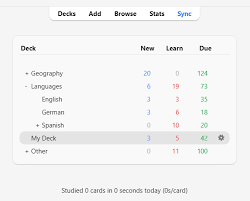
For the program to use, I highly recommend using Anki. It is free, robust, and has a community full of different plugins and pre-made decks to truly make using Anki as easy and personalised as possible. You can use quizlet, but I don't recommend it, as you need to pay for all the features to be accessible.
There are two types of flashcard types you can make (for languages). There is word flashcards and sentence flashcards. Word flashcaards are exactly that, it's just a word on the front and the meaning on the back. It's simple, and quite effective. Sentence flashcards, however, have a word within a sentence, and the meaning of the word on the back. They both have their uses and drawbacks, but using one or the other, or both is fine.
A piece of advice, try to keep the back of the flashcards as concise as possible. It is a lot harder to remeber a few sentences than a phrase or two. I also recommend having a little look at how to style your flashcards, or how to add images, and so on and so on. The anki help manual will be linked in the further reading page.